Art Therapy Worksheets: The Science and Practice of Creative Healing
Art therapy worksheets harness the healing power of creative expression. You do not need to be an artist — these guided activities help access emotions that words alone cannot reach.
BACP-Registered Counsellor & Art Therapy Specialist
TL;DR — Key Takeaway
Art therapy worksheets combine creative expression with therapeutic principles to promote emotional healing, self-discovery, and stress reduction. Research shows that art-based therapeutic activities reduce cortisol levels, improve mood, and provide non-verbal pathways for processing difficult emotions — particularly effective for trauma, grief, and anxiety.
Art therapy worksheets harness the healing power of creative expression in structured, accessible formats. You do not need to be an artist to benefit from art therapy — these worksheets use guided creative activities to help you access emotions that words alone cannot reach.
As a counsellor who specialises in art therapy approaches, I design every resource at Calm With Clara with this principle: beautiful, calming aesthetics are not just decoration — they are part of the therapeutic process. Visual beauty creates emotional safety and invites engagement in ways that plain text worksheets cannot.
For a quick self-check, try our free Self-Care Checklist Generator tool. You may also find our guide to inner child healing worksheets helpful.
The Science Behind Art Therapy
Art therapy is not just about feeling creative — it is a well-researched therapeutic approach with measurable clinical benefits.
Cortisol Reduction — A 2024 study found that 45 minutes of creative activity significantly reduced salivary cortisol levels regardless of artistic ability
Bilateral Brain Activation — Creating art engages both hemispheres of the brain, promoting integration of logical and emotional processing
Non-Verbal Processing — Art provides a pathway for expressing experiences that are difficult to put into words, particularly useful for trauma
Flow State Access — Engaging creative activities can produce flow states that naturally reduce anxiety and improve mood
Neuroplasticity Support — Repeated creative practice builds new neural pathways associated with emotional regulation and self-expression
Therapeutic Art Activities for Mental Health
These activities combine artistic expression with evidence-based therapeutic techniques.
Emotion Colour Mapping — Assign colours to emotions and create abstract art representing your current emotional landscape
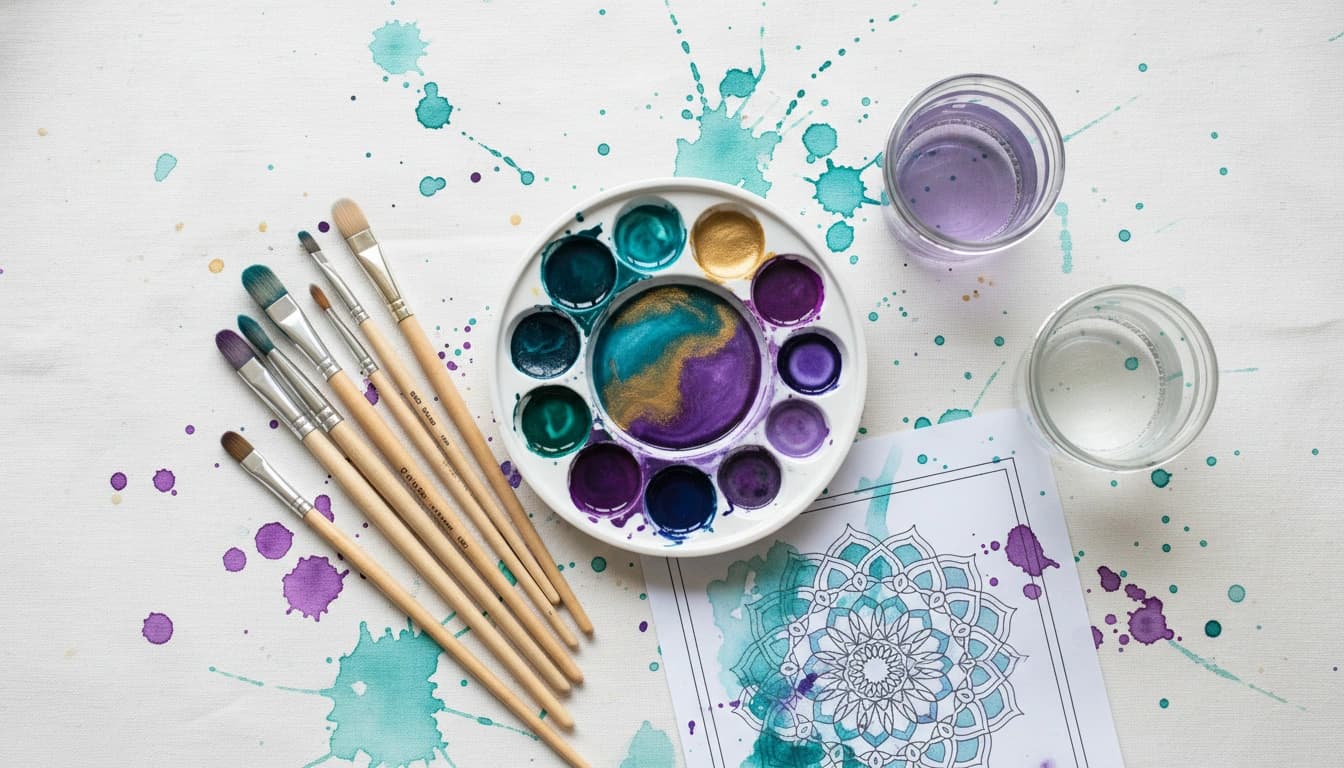
Mandala Drawing for Anxiety — Use geometric patterns to create mandalas, promoting calm focus and mindful attention
Collage Vision Board — Cut and arrange images representing values, goals, and hopes for therapeutic exploration
Guided Art Journaling — Combine visual art with written reflection using structured therapeutic prompts
Body Outline Feelings Map — Draw or colour a body outline showing where emotions are felt physically
Safe Place Drawing — Create a detailed image of a real or imagined safe space for use as a grounding visualisation
Experience Art Therapy at Home with Professional Worksheets
Our therapeutic resources combine clinical expertise with art therapy aesthetics — designed to be both effective and beautiful.
“Art therapy worksheets work because they bypass the analytical mind and speak directly to the emotional brain. When words fail, colours, shapes, and creative expression carry the healing forward.”
Clara Ellington
BACP-Registered Counsellor & Art Therapy Specialist
Frequently Asked Questions
Ready to Start Your Journey?
Browse our complete collection of professionally designed therapeutic worksheets — crafted with clinical expertise and calming aesthetics.
Related Therapeutic Bundles
A4 Therapeutic Resources
Complete collection of beautifully designed therapeutic worksheets in A4 format.
US Letter Therapeutic Resources
Full collection in US Letter format for North American printing.
Calm Corner Mega Kit
Comprehensive resource including art therapy activities for calm-down spaces.
Found this helpful?
Share it with someone who might need it.
Written by Clara Ellington
BACP-Registered Counsellor & Art Therapy Specialist
Clara Ellington is a BACP-registered counsellor (Member No. 123456) with over 8 years of clinical experience across diverse settings. She holds a Diploma in Integrative Counselling & Psychotherapy and a Certificate in Art Therapy Facilitation, combining evidence-based therapeutic techniques with art therapy principles to create beautiful, effective mental health resources through Calm With Clara.