Calming Corner Setup Guide: Create an Effective Calm-Down Space at Home or School
Calming corners reduce behavioural incidents by up to 50% in classrooms. This guide covers everything you need to create an effective calm-down space.
BACP-Registered Counsellor & Art Therapy Specialist
TL;DR — Key Takeaway
A calming corner is a designated safe space where children (and adults) can practise emotional regulation skills. Setting up an effective calm-down corner requires the right visual tools, sensory items, breathing cards, emotion identification charts, and structured coping strategy cards. Research shows calming corners reduce behavioural incidents by up to 50% in classroom settings.
Calming corners have become essential tools in classrooms, therapy rooms, and homes worldwide. A calming corner is a dedicated, safe space where children can go when emotions become overwhelming — not as a punishment, but as an empowerment tool that teaches them to self-regulate.
In this comprehensive guide, I will walk you through everything you need to set up an effective calming corner, the essential resources to include, and evidence-based tips for maximising its impact.
For a quick self-check, try our free Breathing Exercise Timer tool. You may also find our guide to kids life skills worksheets helpful.
What Is a Calming Corner and Why Does It Work?
A calming corner is a designated space equipped with emotional regulation tools, sensory items, and visual coping strategy guides. It works because it provides children with a concrete action plan during emotional overwhelm — rather than telling a child to calm down (which requires skills they may not yet have), the calming corner shows them how.
Schools that implement calming corners report significant reductions in disruptive behaviour, office referrals, and suspension rates. When children have a safe, non-punitive place to regulate, they develop skills that reduce future incidents.
How to Set Up a Calming Corner
Follow these steps to create an effective calming corner in your classroom, therapy room, or home.
Choose a quiet, comfortable location — Away from high-traffic areas but visible enough that children feel safe
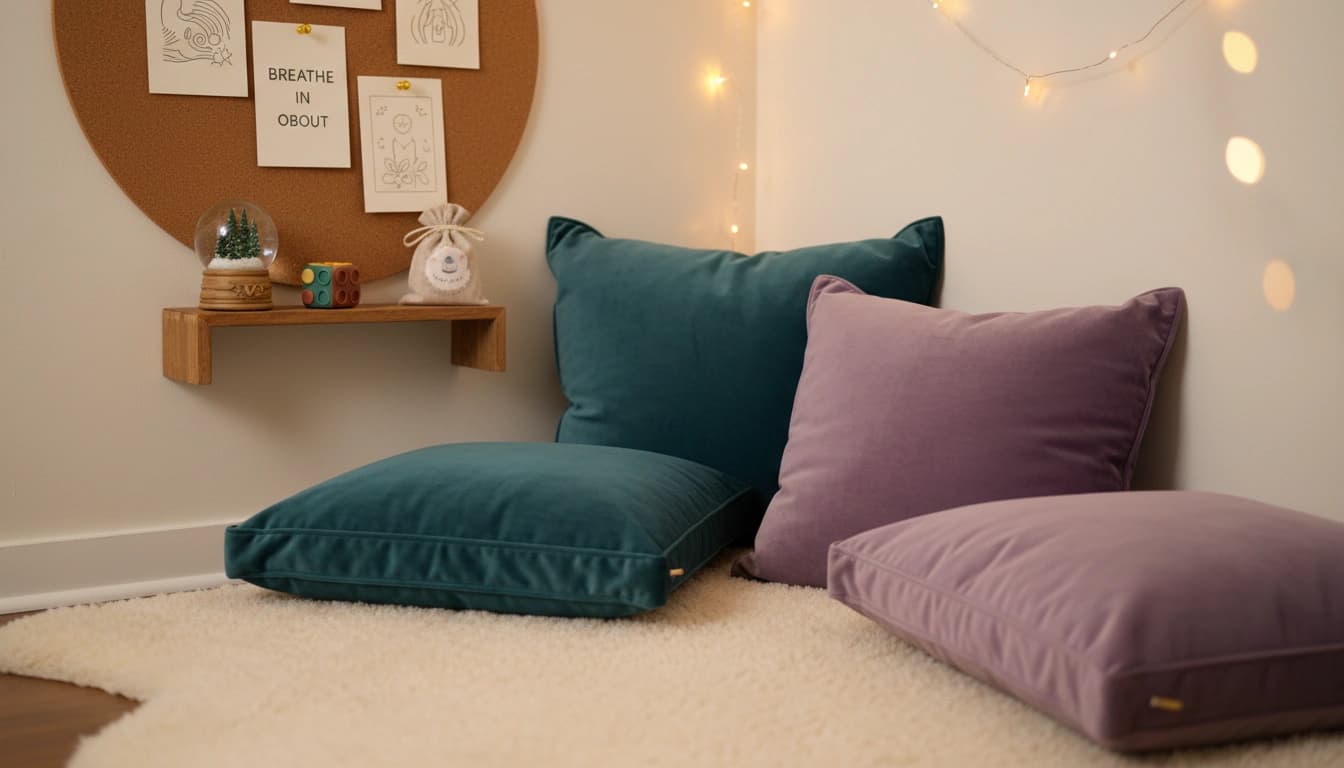
Add comfortable seating — Bean bags, cushions, or a soft rug create a welcoming atmosphere
Display visual coping strategy cards — Breathing exercises, grounding techniques, and emotion identification tools at child eye level
Include sensory items — Stress balls, fidget tools, textured fabrics, and calming bottles
Post a feelings check-in chart — Visual tools for identifying current emotions and their intensity
Add a timer — Helps children learn self-regulation time awareness
Create clear expectations — Introduce the corner to children as a positive tool, not a punishment space
Rotate materials regularly — Keep the space fresh and engaging with new resources
Set Up Your Calming Corner with Everything You Need
Our Calm Corner Mega Kit includes 100+ beautifully designed items — breathing cards, emotion wheels, coping strategies, and more.
Essential Calming Corner Resources
These are the must-have printable resources for an effective calming corner.
Breathing Exercise Cards — Visual guides for box breathing, belly breathing, and other calming techniques
Emotion Wheel or Faces Chart — Helping children name what they are feeling
Coping Strategy Choice Cards — Illustrated options for self-regulation (count to 10, squeeze a stress ball, take deep breaths)
Calm Down Steps Poster — Step-by-step visual guide for the self-regulation process
Feelings Thermometer — Visual scale for rating emotional intensity
Self-Reflection Worksheet — Simple guided questions for after the calm-down period
“A calming corner says to a child: your big feelings are welcome here. You are not in trouble for having them. Here are the tools to help you through.”
Clara Ellington
BACP-Registered Counsellor & Art Therapy Specialist
Frequently Asked Questions
Ready to Start Your Journey?
Browse our complete collection of professionally designed therapeutic worksheets — crafted with clinical expertise and calming aesthetics.
Related Therapeutic Bundles
Calm Corner Mega Kit
Complete calming corner setup with 100+ items including breathing cards, emotion wheels, and coping cards.
Calming Corner Bundle (Kids)
Essential calming corner resources for home or classroom.
Emotional Regulation Kit
Emotion identification and regulation worksheets for children.
Found this helpful?
Share it with someone who might need it.
Written by Clara Ellington
BACP-Registered Counsellor & Art Therapy Specialist
Clara Ellington is a BACP-registered counsellor (Member No. 123456) with over 8 years of clinical experience across diverse settings. She holds a Diploma in Integrative Counselling & Psychotherapy and a Certificate in Art Therapy Facilitation, combining evidence-based therapeutic techniques with art therapy principles to create beautiful, effective mental health resources through Calm With Clara.