Mindfulness Worksheets for Children: Fun Activities That Build Focus and Calm
Children are naturally present-focused, making them excellent candidates for mindfulness practice when presented in playful, age-appropriate formats.
BACP-Registered Counsellor & Art Therapy Specialist
TL;DR — Key Takeaway
Mindfulness worksheets for children use playful, age-appropriate activities to teach present-moment awareness, focused attention, and emotional calm. Evidence shows regular mindfulness practice improves children's attention spans, emotional regulation, academic performance, and sleep quality within 4-8 weeks of consistent practice.
Mindfulness worksheets for children make meditation and present-moment awareness accessible, engaging, and fun. Children are naturally curious and present-focused, making them excellent candidates for mindfulness practice — when it is presented in age-appropriate, playful formats.
Research from the Mindfulness in Schools Project demonstrates that structured mindfulness activities improve attention, emotional regulation, and even academic outcomes in children. The key is presenting these skills through activities that feel like play rather than work.
For a quick self-check, try our free Breathing Exercise Timer tool. You may also find our guide to emotional regulation worksheets for kids helpful.
Benefits of Mindfulness for Children
The evidence for childhood mindfulness continues to grow across multiple research settings.
Improved attention and focus — Children who practise mindfulness show measurable improvements in sustained attention
Better emotional regulation — Mindfulness helps children notice emotions before they become overwhelming
Reduced anxiety — Regular practice decreases worry and anxiety symptoms in school-aged children
Improved sleep — Bedtime mindfulness routines help children fall asleep faster and sleep more soundly
Enhanced empathy — Mindfulness cultivates awareness of others' feelings and promotes kindness
Stronger academic performance — Better focus and emotional regulation support learning
Engaging Mindfulness Activities for Children
These activities are designed to be fun, visual, and achievable for young minds.
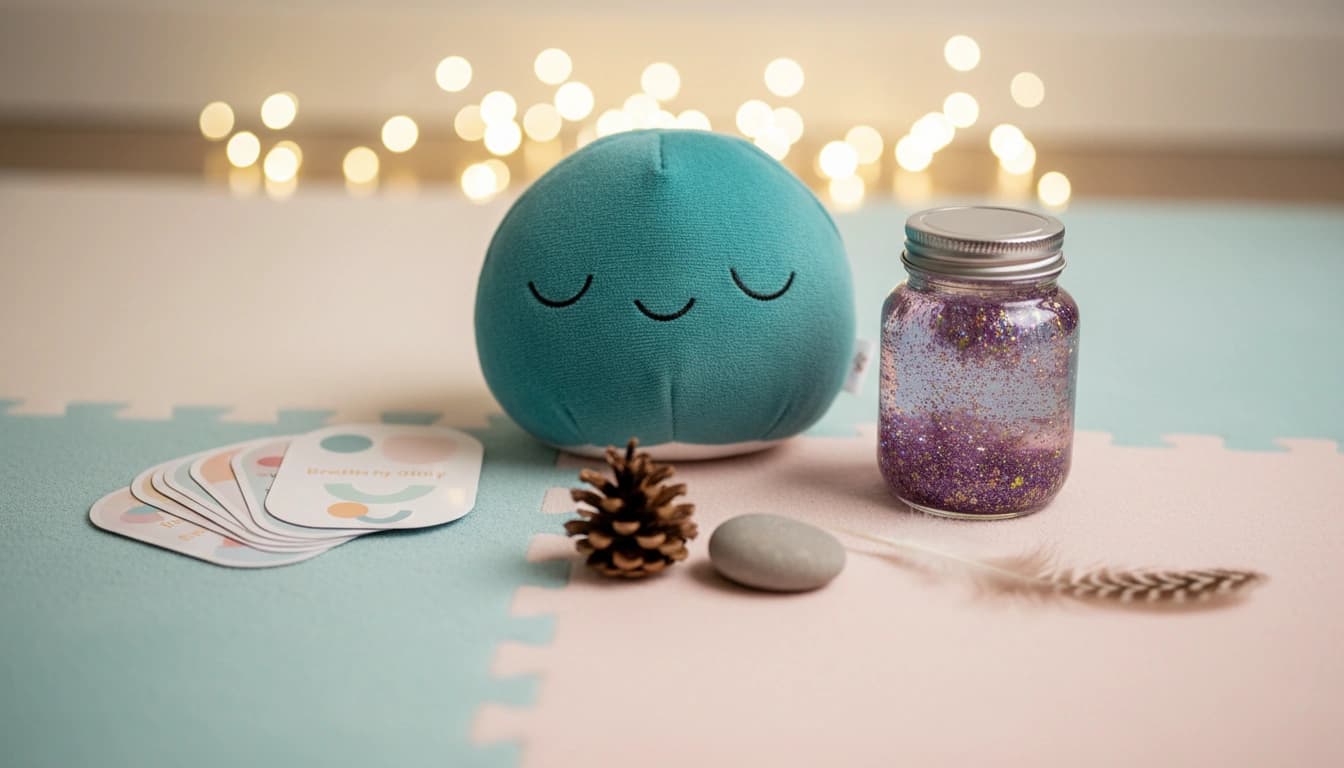
Mindful Breathing Buddies — Place a stuffed animal on the belly and watch it rise and fall with each breath
Sound Safari — Close eyes and count how many different sounds you can hear in 60 seconds
Glitter Jar Meditation — Shake a glitter jar and watch the glitter settle, representing calming thoughts
Mindful Colouring Pages — Therapeutic colouring activities with guided attention to colours, textures, and sensations
Body Weather Report — Describe how your body feels using weather metaphors (stormy, sunny, cloudy)
Gratitude Garden — Draw or write daily gratitudes as flowers in a growing garden
Make Mindfulness Fun with Beautifully Designed Activities
Our Kids Counselling Kit includes engaging mindfulness worksheets alongside emotional regulation and social skills tools.
“Children do not need to sit still and clear their minds to practise mindfulness. They need activities that channel their natural energy into focused, present-moment awareness.”
Clara Ellington
BACP-Registered Counsellor & Art Therapy Specialist
Frequently Asked Questions
Ready to Start Your Journey?
Browse our complete collection of professionally designed therapeutic worksheets — crafted with clinical expertise and calming aesthetics.
Related Therapeutic Bundles
Kids Counselling Kit
Comprehensive counselling resources including mindfulness activities for children.
Calm Corner Mega Kit
Complete calm-down space with mindfulness tools, breathing cards, and sensory activities.
Kids Anxiety Toolbox
Mindfulness and coping tools specifically designed for anxious children.
Found this helpful?
Share it with someone who might need it.
Written by Clara Ellington
BACP-Registered Counsellor & Art Therapy Specialist
Clara Ellington is a BACP-registered counsellor (Member No. 123456) with over 8 years of clinical experience across diverse settings. She holds a Diploma in Integrative Counselling & Psychotherapy and a Certificate in Art Therapy Facilitation, combining evidence-based therapeutic techniques with art therapy principles to create beautiful, effective mental health resources through Calm With Clara.